Your content already works. Now let it work in three more languages.
Here's the thing about short-form: for most formats, the captions ARE the language barrier. The clip, the pacing, the hook structure — all of it travels. A channel that works in German usually works in English and Spanish too. What stops most creators is producing everything twice.
Who this is for
Creators and faceless operators whose content performs in one language — and who know the same videos would land in bigger or less crowded markets. This isn't a new audience type; it's the expansion move for everyone on the Creators page.
The problem
Translating captions by hand, per video, per language, is a production line nobody sustains.
Titles, descriptions and hooks need to be written in the target language, not just translated word-for-word.
Each language needs its own accounts and posting schedule — one more copy of all the manual work.
How VidVertex solves it
Languages ride on brands: your English channel is simply a second brand with its own accounts and its content language set to English. Then everything resolves automatically per language:
Captions translate themselves: the burned-in karaoke captions are translated per brand language — line by line, keeping the original timing, with the clip's context taken into account. Cached per language, editable like the original transcript, and if anything fails the render falls back to the spoken words instead of breaking.
Hooks per language: each language keeps its own set of hook angles, so your German channel and your English channel each open with native-language hooks.
AI copy in the target language: titles, descriptions and first comments are generated in each brand's content language from the same briefing.
The AI voiceover speaks the language too: spoken hook lines use the angle text of that language, in the voice you pick per brand.
Same render, same schedule: language variants are just more brand variants — one batch render, one calendar, posts pushed out via Zernio or Metricool per account.
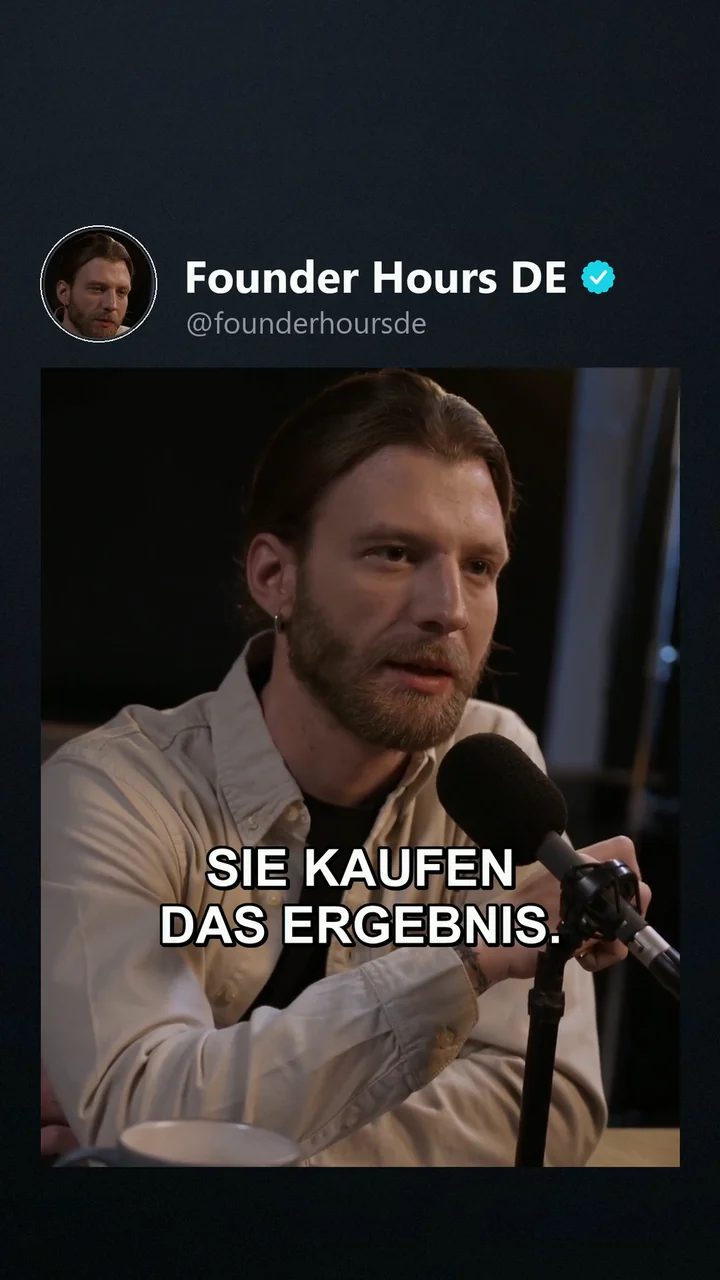
The same stack, rendered for the German page: German hook, German captions, German title and description — the brand's content language decides.
How the money works
It's the same multiplication that runs the rest of VidVertex, extended one axis: views × platforms × brands × languages.
Each language is a separate market — separate accounts, separate platform payouts, separate audiences. The English-language market alone is many times the size of most home markets.
Less crowded ponds — formats saturated in English are often wide open in Spanish, Portuguese, German or French. Being early in a language market is the same advantage as being early on a platform.
Same production cost — the expensive part (making content that works) is already paid. The language variants reuse it.
Diversification — audiences in multiple languages are one more layer of insurance against a single market or algorithm turning against you.
A typical expansion
Duplicate your brand, name it "YourPage EN", set its content language to English, connect its accounts.
Add English hook angles (or generate them from your briefing).
Render — captions and copy come out in English automatically.
Schedule alongside your home-language calendar. Two markets, one workflow.
Ready to multiply your output?
VidVertex runs on your Windows machine — your content, your accounts, no per-post fees. One subscription covers every brand, platform and language you run.