Views but no followers
A video that gets watched and a page that gets followed are two different products. If your views are fine and your follower count isn't moving, the videos are doing their job — the page isn't. Here's the difference and how to close it.
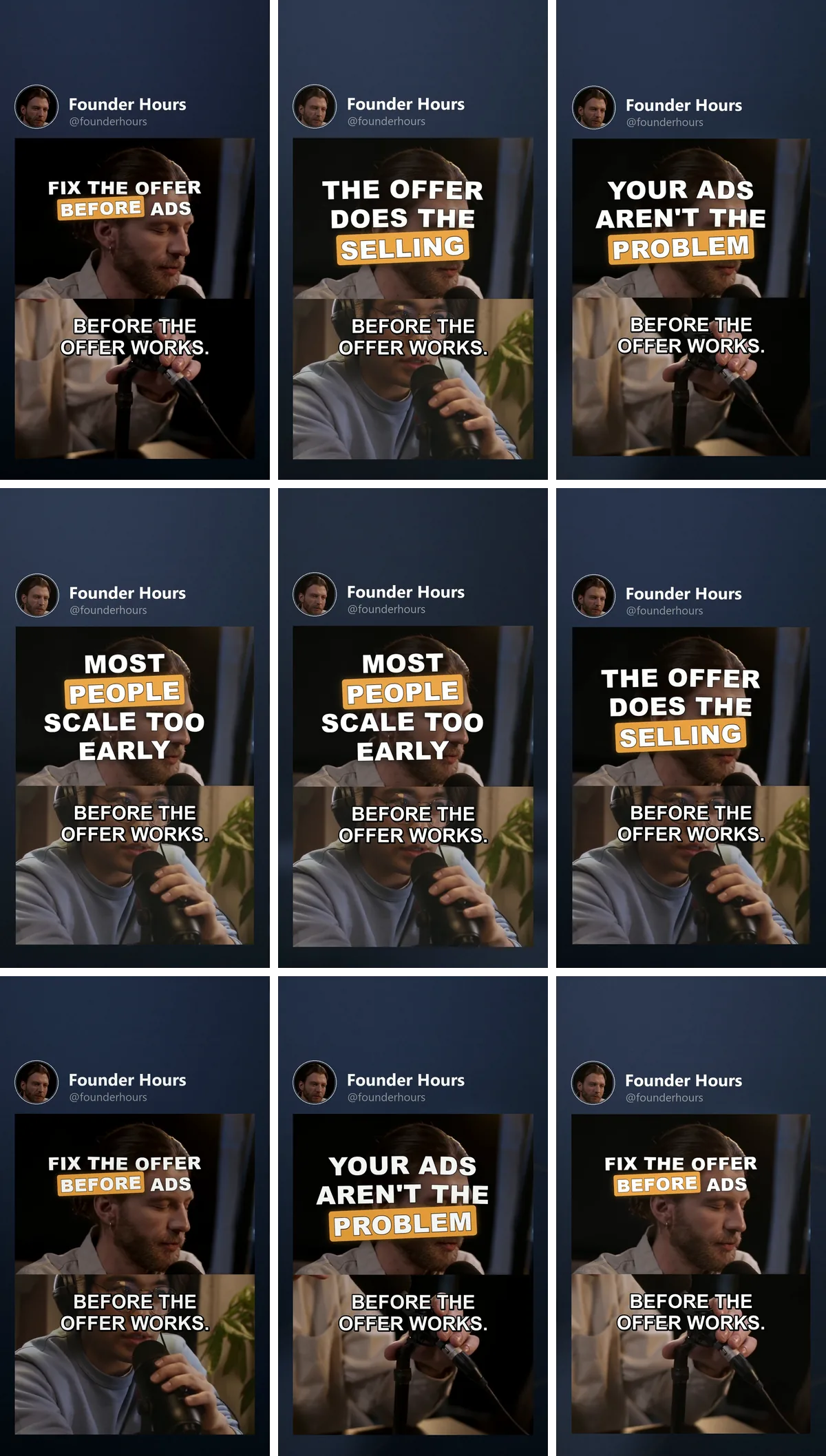 Click to enlarge
Platform behavior referenced here was checked against the platforms' own help pages in August 2026.
A follow is a decision about the next video, not this one. Someone watched your clip, maybe liked it, and then asked themselves — for about half a second — whether they want more of that. Most said no, not because the clip was bad, but because nothing told them what "more of that" would be.
Why people don't follow
In rough order of how often it's the cause:
- They can't tell what the page is. The video was great; the profile is a name, a blurry avatar and eleven unrelated clips. Nobody follows a mystery.
- The video was complete. Some formats satisfy instead of promising. A perfect single joke, a finished explainer, a resolved clip — there's no reason to come back. Great for views, terrible for follows.
- It doesn't feel like a series. People follow formats — "the guy who rates X", "daily Y", "the Z breakdown" — far more than they follow individual good videos.
- They never saw the profile. On most platforms a follow happens after tapping through to the profile, or from a prompt in the video. If the video never points anywhere, the viewer swipes to the next thing.
- The audience was wrong. Broad-appeal content gets tested on broad people, who are the least likely to commit to a niche page (picking a niche).
None of these is "the algorithm". Follows are almost entirely a human decision, made on the profile or in the last two seconds of the video.
Fix the page first
Everything below is free and takes an hour:
- Name + one line that says what you'll get. "Daily clips from the X podcast." "Pricing mistakes, one a day." A bio that explains the series beats a bio that explains you.
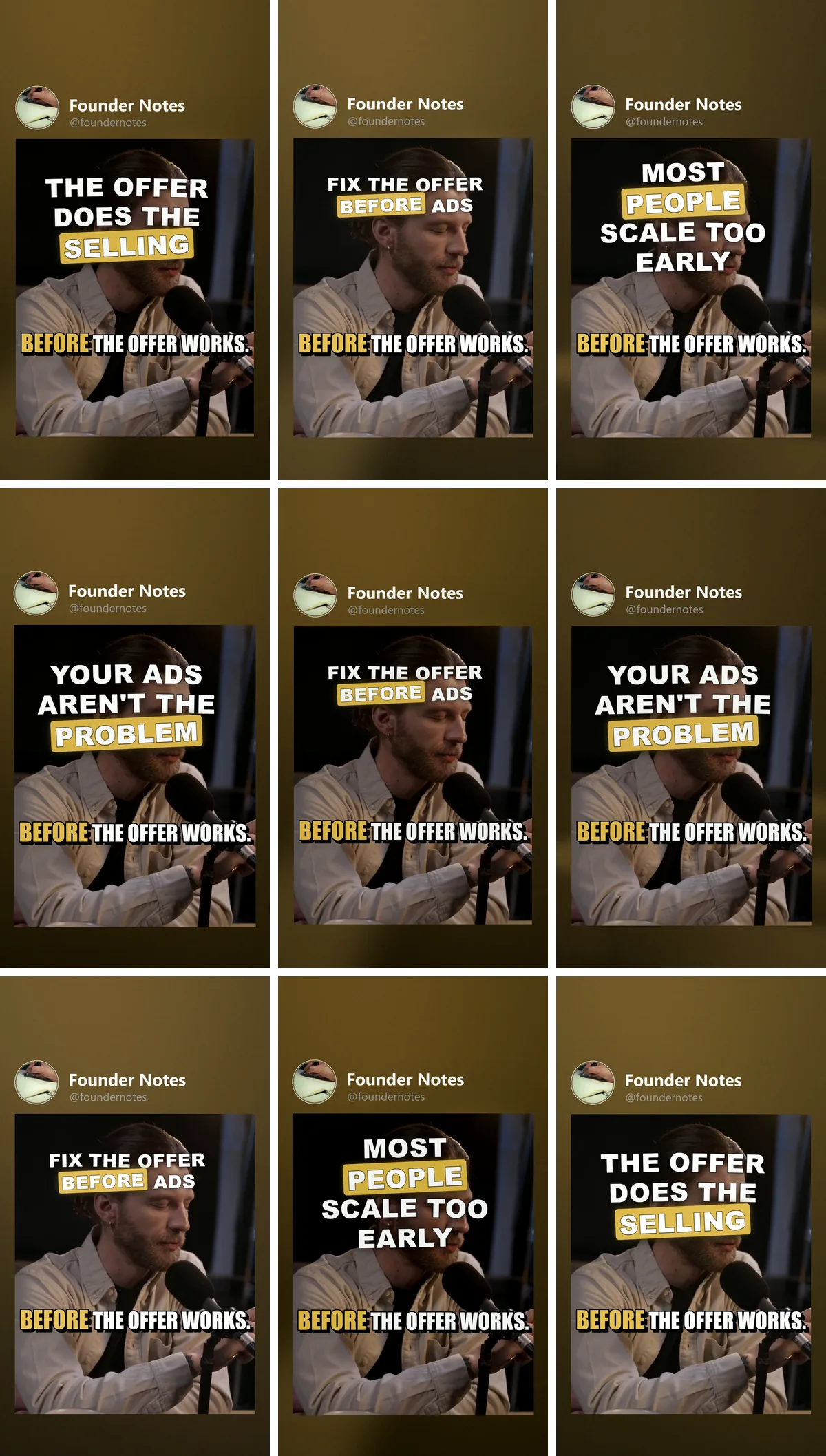
- A grid that looks like one thing. Consistent cover frames, the same caption style, the same text placement. Someone landing on the profile should be able to tell in one glance that the next ten videos are the thing they just liked. VidVertex's brand-level caption style and cover frame do this mechanically across every post (cover frames) — but a manual page can do it with discipline.
- Pin the three best videos. The ones that represent the format, not the one-off that went viral.
- A link that makes sense. Not for the follow itself, but a profile with a real link reads as a real page.
Everything in that list is free and takes an hour. Do it before you touch a single edit — the videos are already working.
Then fix the video's last two seconds
- Say what's next. An endcard, a spoken line, a caption — "part 2 on the page", "one of these every day", "follow for the full list". It feels cheesy; it measurably works, which is why every large page does it. VidVertex has an endcard widget precisely because typing this into every edit by hand is the step everyone skips.
- Leave one thing open. Series formats ("part 3 of 7", "today's example, tomorrow's counter-example") give a concrete reason to return.
- Make the first comment do work. A pinned first comment with context and a pointer to the page is read by the people who liked the video enough to open comments — exactly the people who follow.
 Click to enlarge
Check you're measuring the right thing
Most analytics show follows from this video. Sort by that instead of views. You'll usually find that two or three formats produce most of the follows while the big-view videos produce almost none. That's your answer: the big-view formats are your reach content, the follow formats are your page content, and a healthy page posts both on purpose rather than chasing only the first.
The honest caveat
Some content is structurally a views business, not a follows business — satisfying clips, single facts, anything that resolves in eight seconds. That's fine if the model fits: platform payouts and sponsored reach pay on views, and plenty of pages run that way on purpose (platform payouts). The mistake is running a views format while judging it by follows. Pick which one the page is for, then read the number that matches.
 ACCOUNTS & GROWTH · 3 MINFrom zero to the first 1,000 followersThe first thousand is the hardest — and the most honest. Nobody knows you, nothing carries over, and every follow has to be earned by a video.TROUBLESHOOTING · 4 MINFollowers but no views: why old accounts go quietFifty thousand followers and four hundred views is the most confusing number in short-form — and one of the most common. It's not a bug and it's rarely a ban. It's what happens when a follower count stops describing an audience.START HERE · 3 MINPicking a niche that can actually monetize"Follow your passion" and "chase the trend" are both half-answers. A niche is a three-way fit: audience demand, your ability to produce for it — and a way for money to enter the room.