Posting times: does it still matter?
Every platform has a "best time to post" chart, and every chart disagrees with the last one. Here's how much the clock actually moves a short-form video in 2026, when it genuinely matters, and how to set times once and stop thinking about it.
Short answer: a little, and less every year. Recommendation feeds test a video on a small group and expand from there (how distribution works); that group exists at 3 a.m. too. The clock affects how fast the first test happens and who's in the first group, not whether the video gets its chance.
A good video posted at a bad time still travels; a weak video posted at the perfect time still stops at a few hundred views. The clock moves the start of the test, not its verdict.
Where the clock does matter
- Followers-first surfaces. Stories, Facebook and Instagram feed posts, X and Threads and Bluesky — anything where your existing audience is a big share of the first hour. Post when they're awake, in their time zone.
- Reply-driven feeds. X and Threads reward conversation in the first hour. Posting when you can answer replies beats any chart.
- The wrong-country problem. If a page keeps landing in a time zone it doesn't want, the posting time is one of the signals (views from the wrong country).
- Consistency. Not "Tuesday at 6" specifically — but a page that posts at roughly the same time daily gives its followers a habit and the platform a pattern. Irregular bursts are the thing to avoid (account flags).
Where it barely matters
- TikTok, Reels and Shorts recommendation. The platforms have said their feeds aren't chronological; the test-and-expand loop runs whenever.
- Pinterest, where a pin lives for months (Pinterest guide).
- Anything judged after a week. The first-hour difference washes out.
How to pick a time, once
- Read your own analytics. Every platform shows when your followers are active. Use the audience's peak, not a chart made from someone else's audience.
- Post an hour or two before the peak, so the first test has run by the time most of them open the app.
- One time per brand, per market. A German page posts on a German evening, the English page on its own; a client's page on the client's time. This is why VidVertex keeps the posting time on the brand rather than on the post (brand scheduling): set it once and every scheduled post inherits it.
- Stagger sibling brands. Several brands posting the same clip at the same minute is a pattern; a few minutes apart is not. The brand's "Delayed posting (minutes)" field does this automatically.
- Leave it alone. Changing times weekly makes the data unreadable. Re-check the audience chart once a quarter.
When one channel needs its own clock — a Story at noon, a Reel in the evening — the brand editor's "Custom times" rules pin exact times per platform and post type, and the rest of the roster keeps the brand's normal time.
What the charts get wrong
Generic "best time" charts average every account on earth. They're right that lunchtime and evenings are busy and wrong that it matters for your video — busy hours also have the most competition. Your audience chart is the only chart worth reading.
The honest priority list
If you have an hour to improve a page, posting time is near the bottom. Above it: the first second (hooks), captions (captions & retention), posting often enough (cadence), and making each page's upload a real variant instead of a copy (duplicate content). Set the time once, schedule the week, spend the hour on the video.
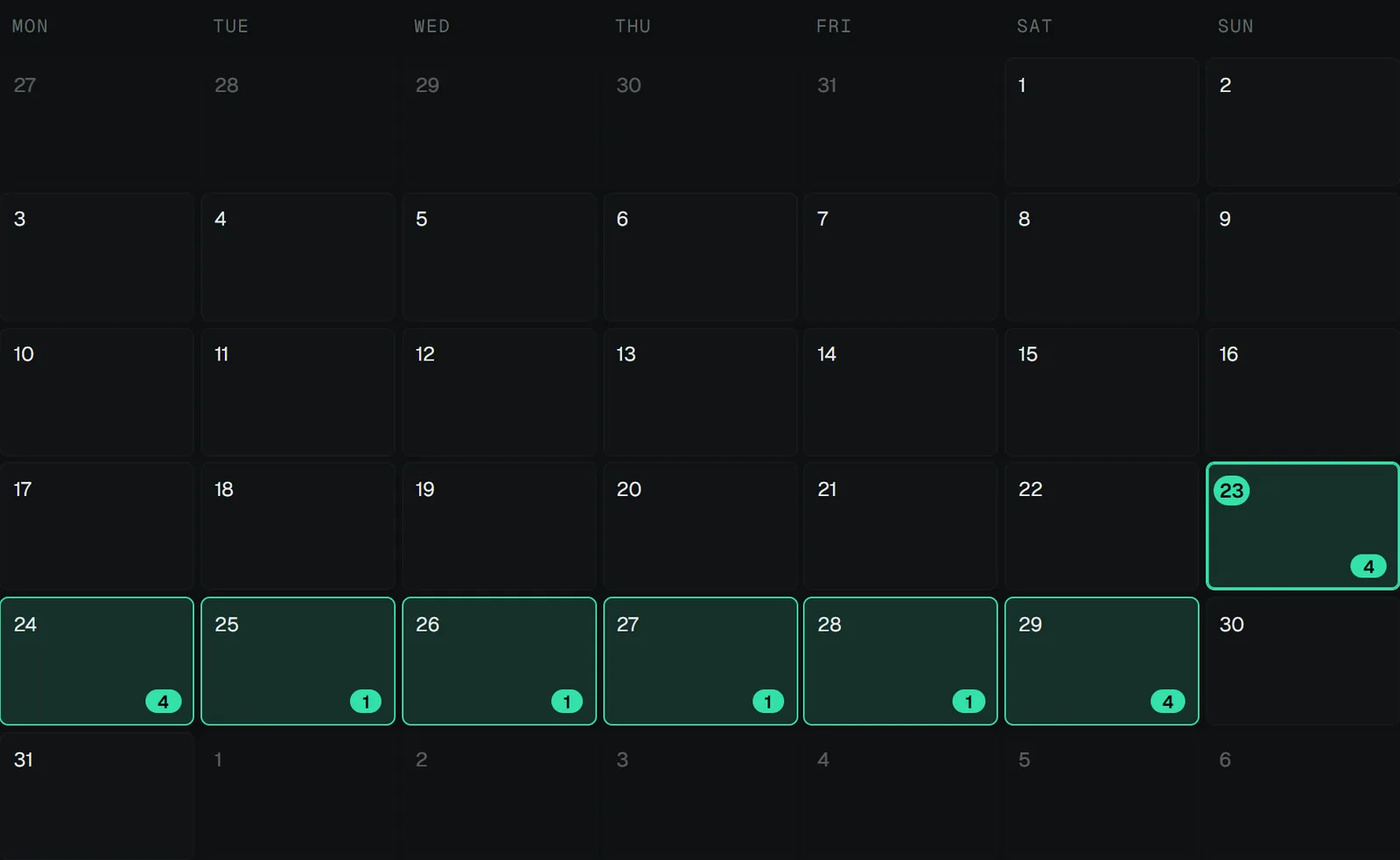 ACCOUNTS & GROWTH · 3 MINA batching week: the content calendar that survives real lifeDaily posting doesn't mean daily producing. The pages that stay consistent for years run on a batch rhythm — one block of making, one block of packaging, a queue that posts itself. Here's a week that works for one page and scales to twenty.